Utilizing Naloxone to Address the Opioid Crisis at Your Organization (Webinar Recap)
March 29, 2024
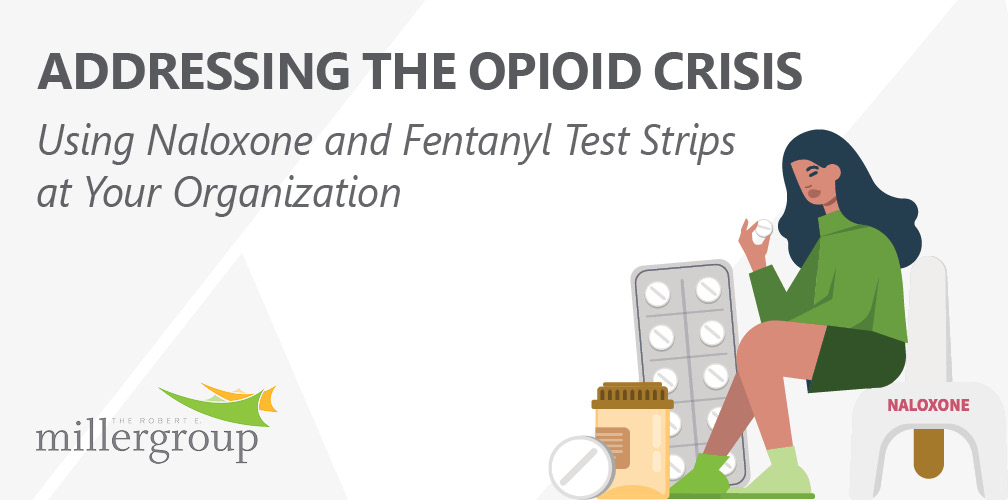
In this webinar recap, learn how naloxone can become a life-saving resource at your organization. Our panel discussed costs, training and the right policies to put into place.
Share
Print
Amid one of the most critical health crises in the United States, organizations are recognizing the importance of responding quickly when a potentially fatal overdose occurs. This is where naloxone, also known as Narcan, steps in to help.
Naloxone is a lifesaving medication that can quickly help reverse an overdose while waiting for first responders to arrive. It can be administered either through a quick three step nasal spray process, or through an injection.
Dustin Carney, Director of Claims at The Miller Group, sat down with Colene Medrano, Executive Director of RSI and Crisis Departments at Wyandot Behavioral Health Network, and Aaron Paris, Director of Safety at The Miller Group.
The group discussed signs of an overdose; the steps to administer naloxone; where to find it; what it looks like; cost of the medicine; what policies can be put into place and the most effective way to combat the opioid crisis. Below is a glimpse at the information our panelists discussed.
Preventing overdoses, training and understanding potential liability
Naloxone is increasingly integral to organizations, such as having an AED on hand. Panelists discussed how having naloxone on-hand can easily make the difference between life and death.
When an organization chooses to have naloxone available, employees can undergo training to recognize the signs of an overdose and how to properly administer the medicine, whether through nasal spray or injection. Panelists discussed the ease of training through utilizing a 40 second video and a three-step process shown on the medications packaging.
Along with naloxone, panelists highlighted fentanyl test strips and how they can also benefit organizations. Test strips are a more proactive approach rather than reacting to a potential overdose.
Testing can help start a conversation and bring awareness to just how dangerous opioids are. All three panelists agreed that one of the most effective ways to combat the crisis is getting the word out about the dangers of fentanyl and other opioids.
When administering the medication and providing test strips, some may think of what legal repercussions there may be. Our panelists discuss Good Samaritan Laws for different states and how putting the right policies into place will protect you and those you serve.
Fostering an environment of awareness and preparedness is a crucial step towards mitigating the impacts of the opioid crisis and safeguarding the health and safety of both employees and the broader community.
Watch the full discussion to gain insights on how naloxone and fentanyl test strips can aid your organization in the case of an opioid overdose.
Additional resources
During the webinar, our panelists highlighted a few resources that organizations should consider for providing naloxone, including training, costs and the different types of naloxone to acquire. You can find those here:
The Miller Group
After more than 60 years, The Miller Group is one of the largest independent insurance companies in the Midwest. We serve as strategic advisors for property & casualty, employee benefits, and surety bond programs and specialize in working with construction, nonprofit, and manufacturing companies across the United States.
Pre-tax insurance deductions can save employers and employees money, but employers need a plan document authorizing the arrangement. Learn what a Premium-Only Plan (POP) document covers, when it is sufficient, and when benefits such as a health or dependent care FSA require a more comprehensive cafeteria plan document.
Check out the blog post
October 7, 2026
Switching Health Plans During a Spouse’s Open Enrollment
A spouse’s open enrollment may allow an employee to switch to their own employer’s health plan mid-year, even when dropping coverage is voluntary. Learn why the cafeteria plan document matters and what employers should confirm about timing and documentation before approving the change.
Check out the blog post
September 16, 2026
Wrap Documents and Why They Matter
Carrier certificates and benefit booklets explain individual coverages, but they may not provide all the information required for an employer’s overall health and welfare plan. Learn how a wrap document fills plan-level gaps, supports ERISA documentation requirements, and clarifies how the benefits work together.